
Dimensional control
Diameter gauge
and height
Analog calipers for measuring diameter and flaring height, designed for quality control of your tubes and flared fittings. Made in France, COFRAC-traceable.
- COFRAC
- Made in France
- Dedicated After sale
Simplicity and Performance
Our crimp diameter gauges are designed to meet the most demanding quality control requirements.
|
Range 25—29 mm |
Resolution 0.01 mm |
|
Measuring force 1.4—2.2 N |
Temperature 10—30 °C |
- UAerosol
- URefrigeration
- UPlumbing
- UHydraulics
- UIndustry
Our product line
Check out our mandrel gauges
Expansion diameter
A2100
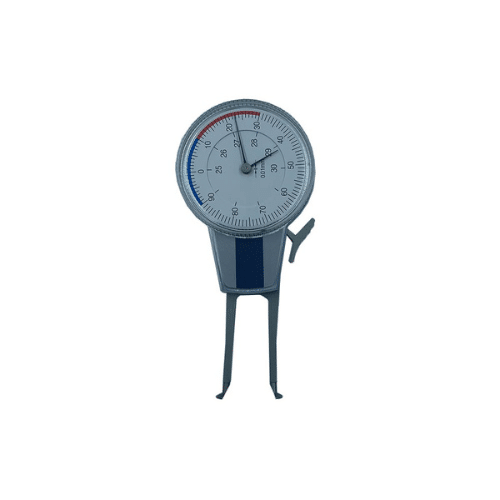
Analog crimp diameter gauge, designed for quality control of aerosol crimping in workshops and on production lines.
- EResolution 0.01 mm
- EAnalog reading
Crimping height
AE 2100
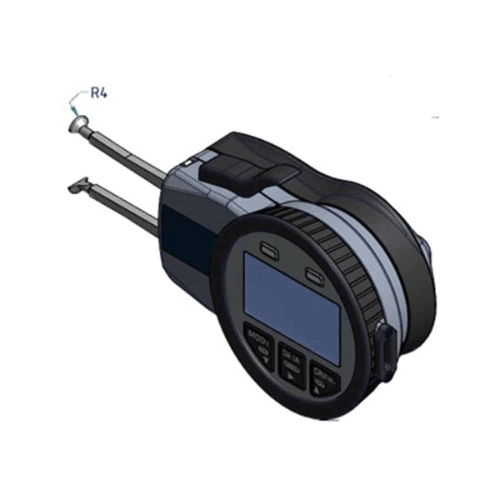
Analog crimp height gauge, for reliable and repeatable dimensional inspection of heads and valves.
- EResolution 0.01 mm
- EAnalog reading
Comparison
Technical information
| Criteria | A2100 | AE 2100 |
|---|---|---|
| Type | Aerosol | Aerosol |
| Plage | 25—29 mm | 25—29 mm |
| Resolution | 0.01 mm | 0.01 mm |
| Force de mesure | 1.4—2.2 N | 1.9—2.2 N |
| Weight | 110 g | 230 g |
| Max. error eligible | 0.03 mm | 0.02 mm |
| Repeatability error | 0.02 mm | 0.01 mm |
| Operating temperature | 10—30 °C | 10—30 °C |
Accessory
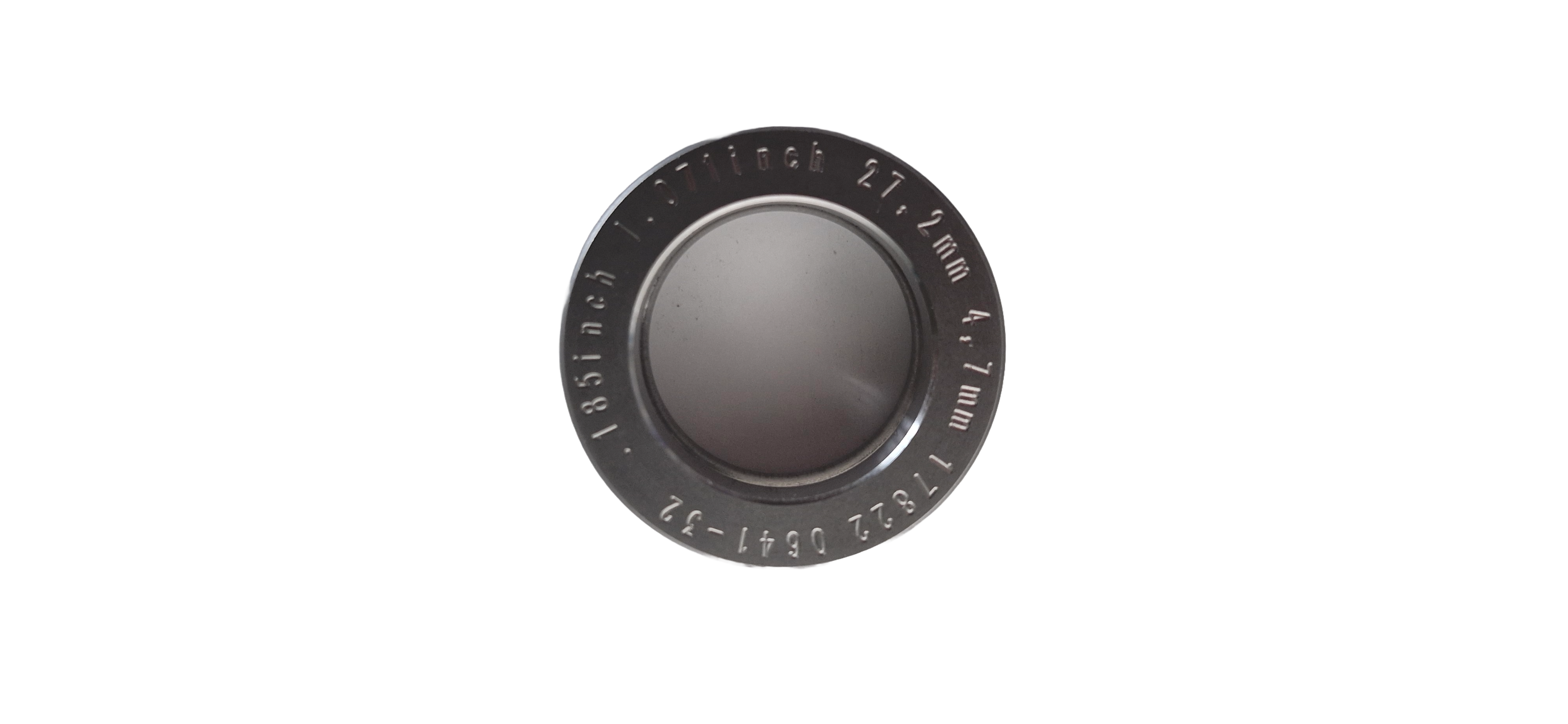
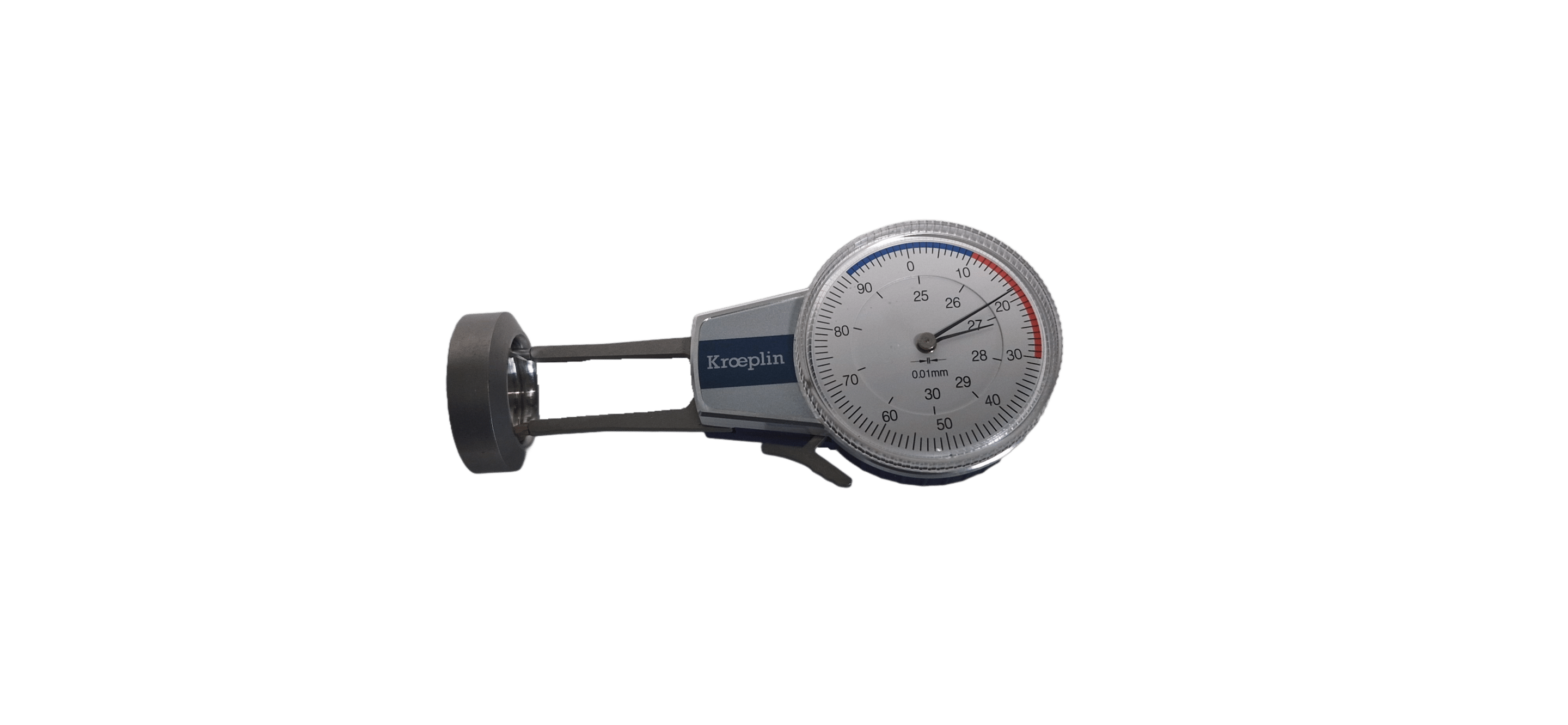
Calibration shim
An essential accessory for ensuring the accuracy of your measurements, the calibration block allows you to adjust and verify the accuracy of the crimp height gauge. Designed for optimum repeatability, it facilitates instrument calibration and guarantees reliable results in your crimping checks.
Applications & Industries
Dudgeoning: A Cross-Functional Requirement
Controlling the diameter and height of the flaring is a critical step in any application where the leak-tightness of a pipe joint determines the reliability of the installation. Our measuring devices ensure accurate measurements, both in the workshop and on the production line.
Sector 01
Refrigeration & Air Conditioning
In refrigeration systems, flaring copper and aluminum tubes ensures leak-tight connections without soldering. Our gauges check the diameter and height of the dudgeons to ensure that the assemblies meet specifications and prevent fluid leaks.
The crimping of valves and aerosol caps requires strict dimensional inspection. Our A2100 and AE 2100 measuring devices check the diameter and height of the crimp to tight tolerances, ensuring the leak-tightness and compliance of your packaging.
Sector 02
Aerosols & Packaging
Sector 03
Plumbing & Sanitary Fixtures
In plumbing and water supply systems, flared fittings must adhere to precise dimensions. Regular inspection of the diameter and height of the flared end prevents leaks and fit issues in copper and metal tubes.
In hydraulic systems and industrial pressure equipment, the reliability of a pipe joint depends on proper flaring. Our inspectors verify critical dimensions both in the workshop and on the production line to ensure rigorous and traceable quality control.
Sector 04
Hydraulics & Industry
Frequently Asked Questions
FAQ — Everything You Need to Know About the Dudgeoning Diameter and Height Gauge
01
What is a diameter and height gauge for upsetting?
This is a measuring tool designed to accurately measure the diameter and height of flared ends (widened sections at the ends of tubes), which are commonly used in plumbing, HVAC, and industrial equipment systems.
02
What is the purpose of this machine in a production process?
It ensures that swaged parts meet strict tolerances. It is used to ensure the quality of assemblies and prevent leaks or misalignments.
03
On what types of tubes can this device be used?
The gauge can be adjusted to fit pipes of various diameters, including those made of copper, aluminum, or other metals used in refrigeration systems or plumbing installations.
04
Is it a manual or electronic device?
Depending on the model, it may be a manual device with a mechanical display or an electronic device with a digital display. Some models even offer the ability to record measurements.
05
Can it be used in a workshop as well as on a production line?
Yes. It is designed for use in both quality control laboratories and industrial settings, directly on the production line.
06
Can the device be calibrated?
Yes, the meter can be calibrated to ensure measurement accuracy over time. A calibration procedure or kit can be provided.