
Dimensional control
Analog
thickness gauge
Efficient and versatile. Our analog thickness gauges are designed to meet the most demanding requirements for precision and reliability.
6
Analog models
0 to 100 mm
Measuring ranges
0.005 mm
Best resolution
External and internal
Measurement types
Our range
Our analog thickness gauges
External · Analog
D110
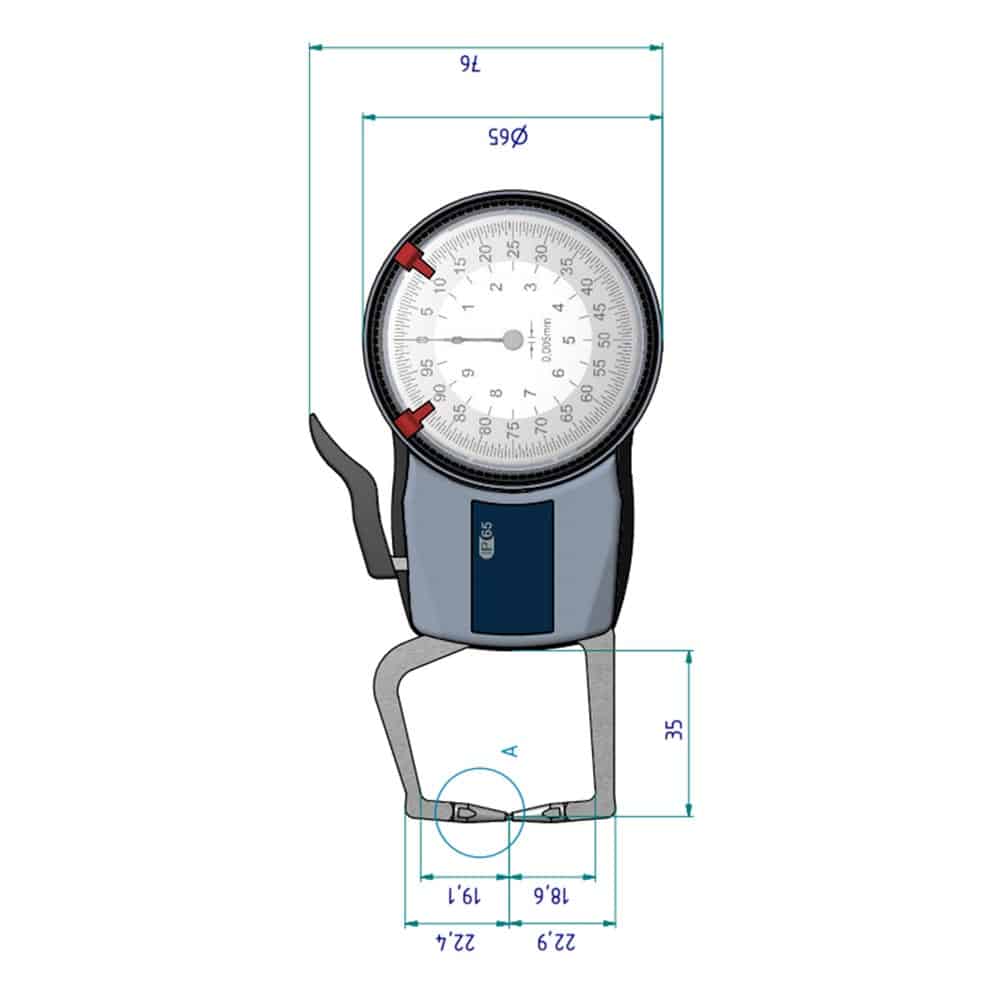
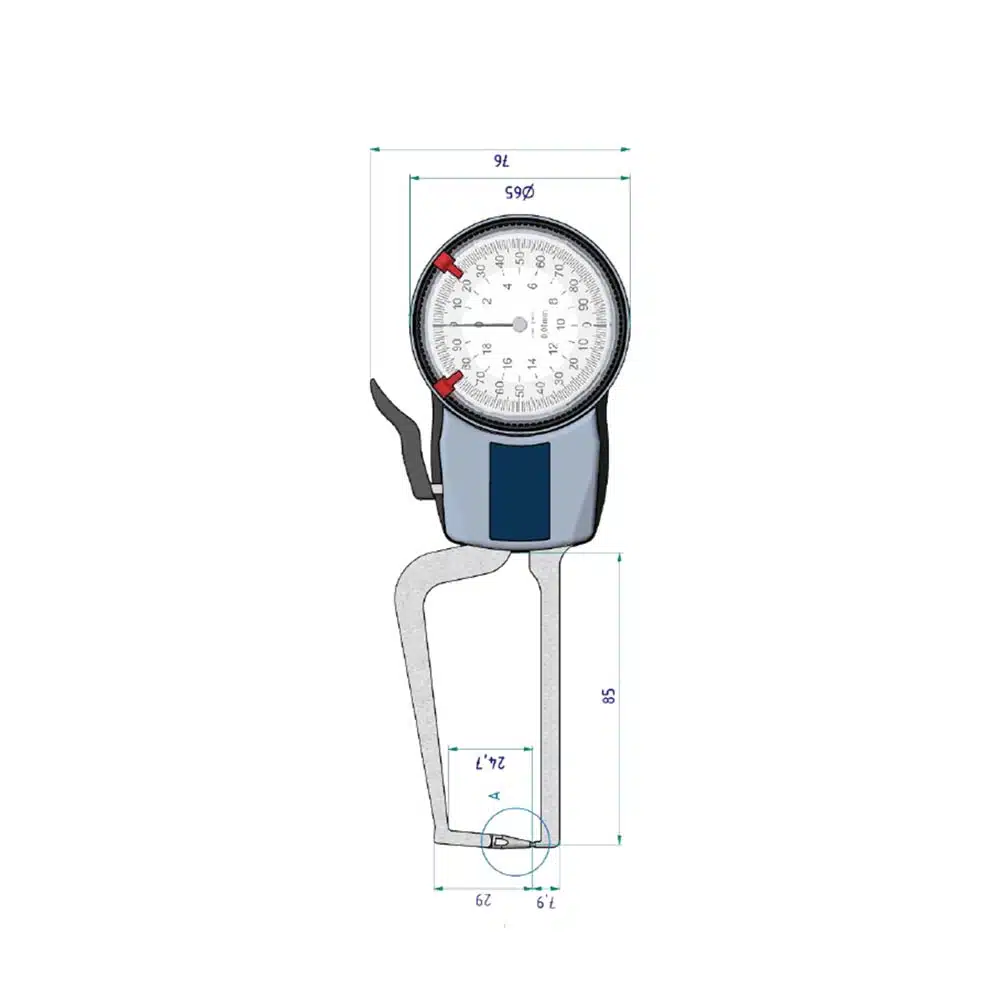
Range 0 to 10 mm, resolution 0.005 mm, maximum error 0.015 mm.
External · Analog
D2R20
Range 0 to 20 mm, resolution 0.01 mm, maximum error 0.04 mm.
External · Analog
D4R50
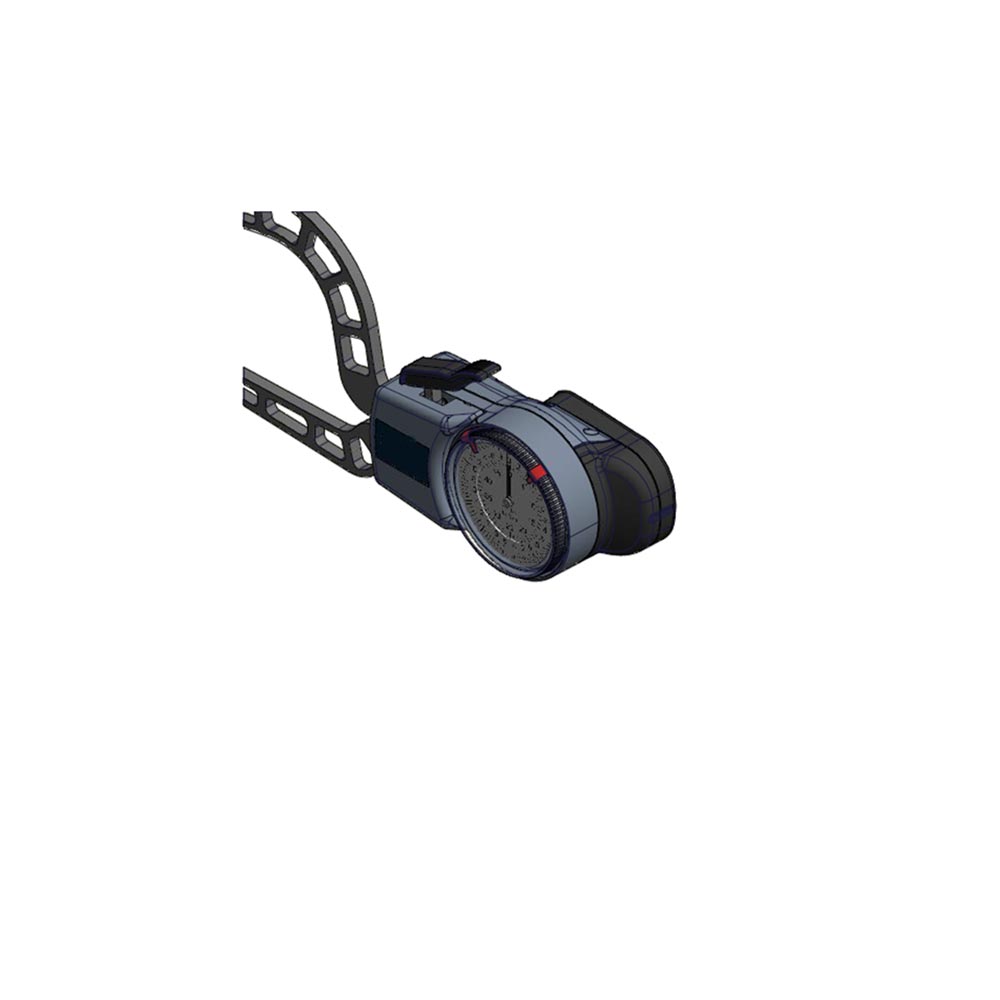
Range 0 to 50 mm, resolution 0.05 mm, maximum error 0.05 mm.
Internal · Analog
H210
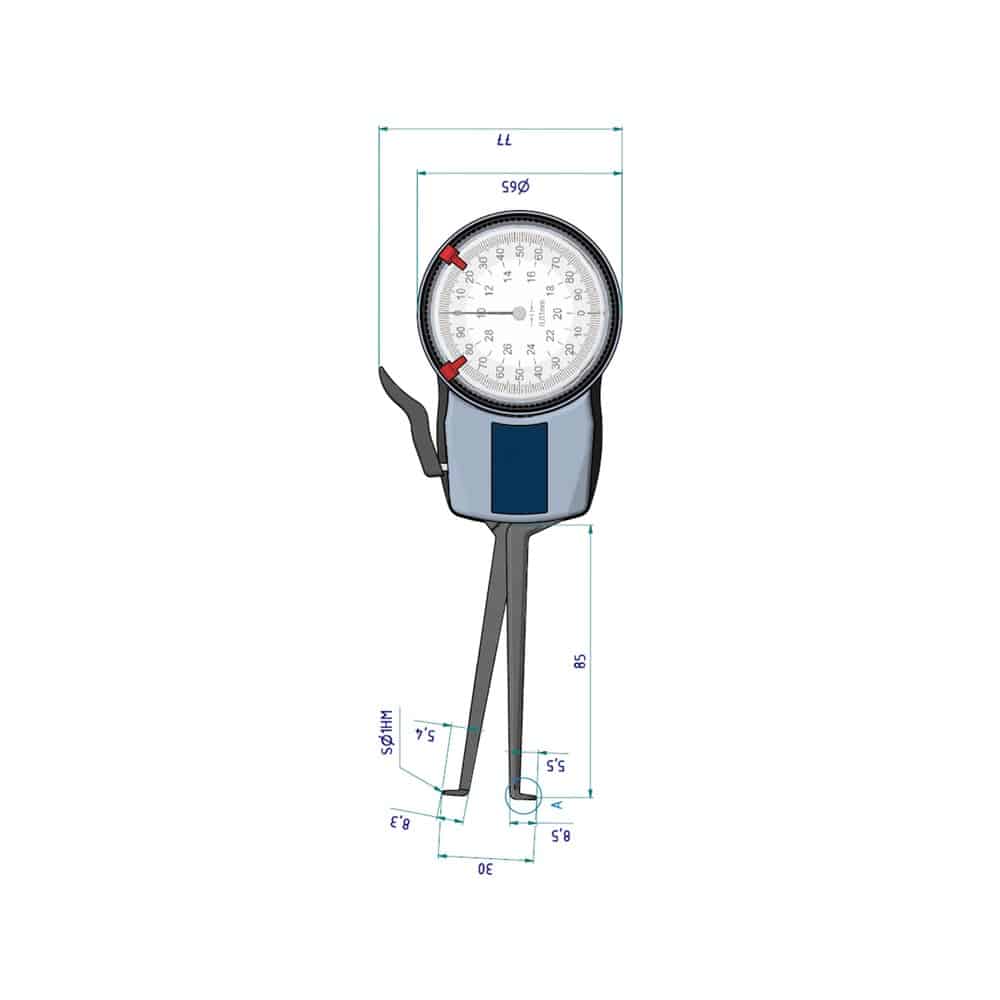
Range 10 to 30 mm, resolution 0.01 mm, maximum error 0.03 mm.
Internal · Analog
H250
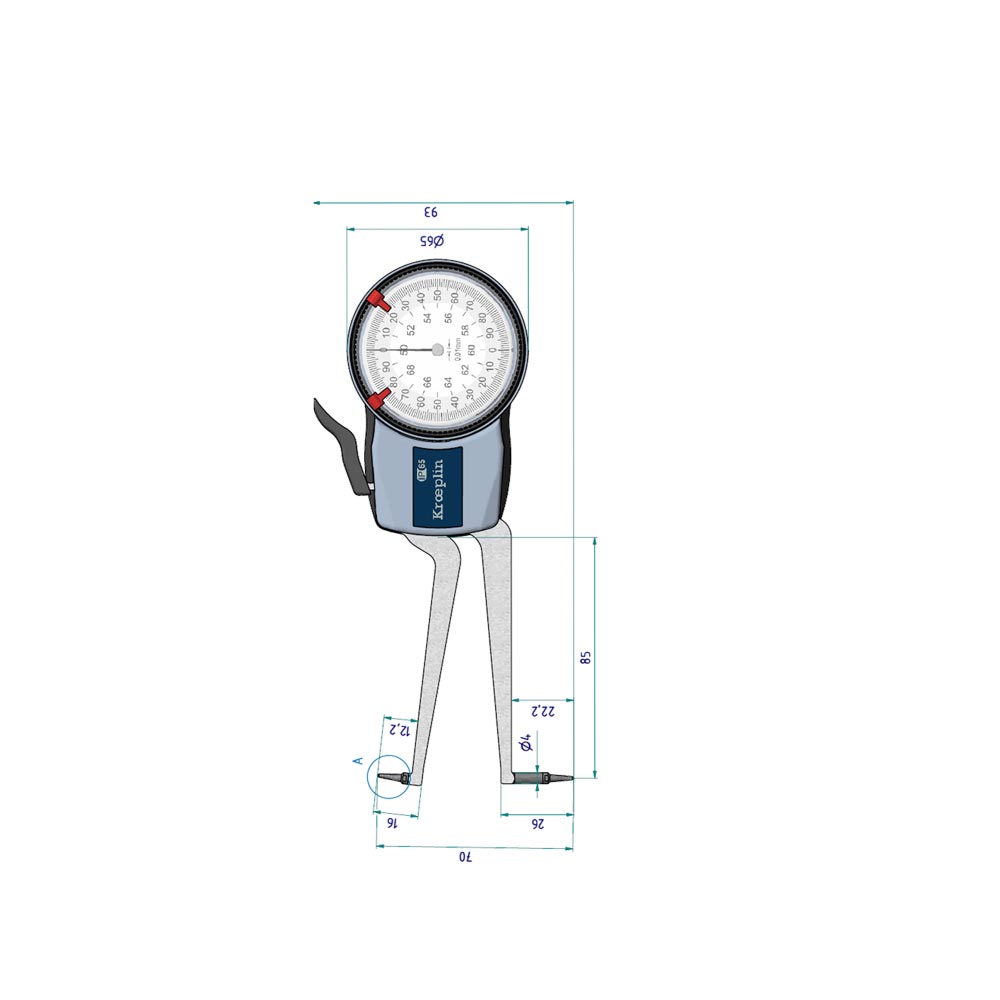
Range 50 to 70 mm, resolution 0.02 mm, maximum error 0.03 mm.
Internal · Analog
H280
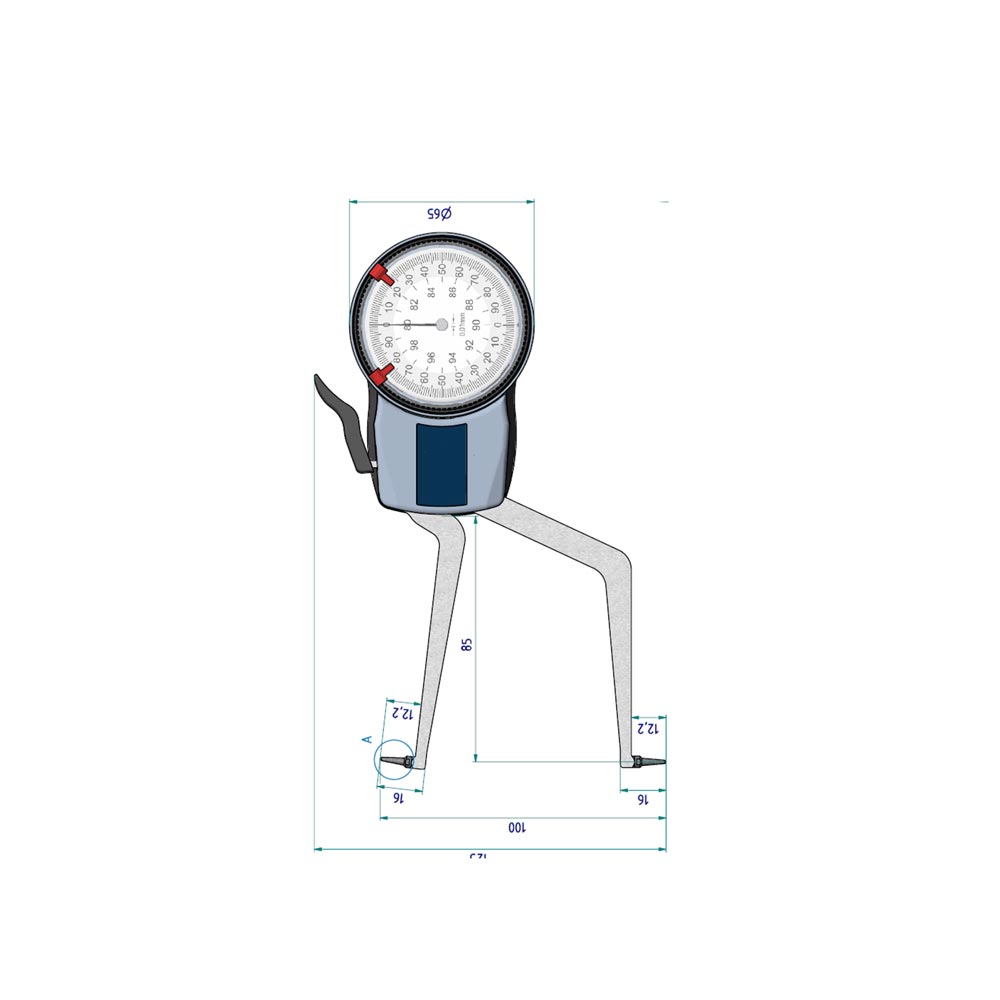
Range 80 to 100 mm, resolution 0.01 mm, maximum error 0.03 mm.
Comparison
Which analog thickness gauge should you choose?
| Criterion | D110 | D2R20 | D4R50 | H210 | H250 | H280 |
|---|---|---|---|---|---|---|
| Type | External | External | External | Internal | Internal | Internal |
| Range | 0 to 10 mm | 0 to 20 mm | 0 to 50 mm | 10 to 30 mm | 50 to 70 mm | 80 to 100 mm |
| Resolution | 0.005 mm | 0.01 mm | 0.05 mm | 0.01 mm | 0.02 mm | 0.01 mm |
| Max. error | 0.015 mm | 0.04 mm | 0.05 mm | 0.03 mm | 0.03 mm | 0.03 mm |
| Repeatability | 0.005 mm | 0.02 mm | 0.025 mm | 0.01 mm | 0.01 mm | 0.01 mm |
| Weight | 170 g | 410 g | 400 g | 180 g | 195 g | 200 g |
To compare all 12 analog and digital models, see our thickness gauge comparison.
ACRN expertise
Why choose our analog thickness gauges?
At ACRN, we know that every industrial application requires reliable and suitable measuring tools. Our analog thickness gauges, whether new or designed to integrate with your existing equipment, offer a precise solution for checking the thickness of your materials.
Easy reading
Quick and easy reading for immediate control.
Reliability
High reliability, even in demanding industrial environments.
Tailored configurations
Configurations tailored to your specific needs.
Frequently Asked Questions
Frequently asked questions about the analog thickness gauge
What is an analog thickness gauge?
An analog thickness gauge is a mechanical instrument used to accurately measure the thickness of various materials. It features a pointer dial that indicates the measurement obtained when the device’s keys are in contact with the object to be measured.
What types of materials can be measured with these devices?
Analog thickness gauges are suitable for measuring the thickness of materials such as metal, leather, rubber, wood, plastic, glass, cardboard and fabric. The choice of measuring keys must be adapted to the specific material to ensure optimum precision.
How do I choose the right analog thickness gauge for my needs?
-
Required measuring range: make sure the instrument covers the maximum thickness of your parts.
-
Precision required: select a device with the appropriate resolution for your requirements.
-
Type of material: choose measuring keys suited to the material to be inspected to avoid damage and ensure accurate measurements.
To compare the ranges, resolutions and maximum errors of the 12 analog and digital models, see our thickness gauge comparison.
Do analog thickness gauges require any special maintenance?
Regular maintenance is recommended to ensure instrument longevity and accuracy. This includes cleaning the measuring surfaces, storing in a dry environment and periodically checking calibration.
Your project
Need advice or a personalized quote?
Tell us about your parts and materials (thickness, required accuracy): we will recommend the right gauge.