
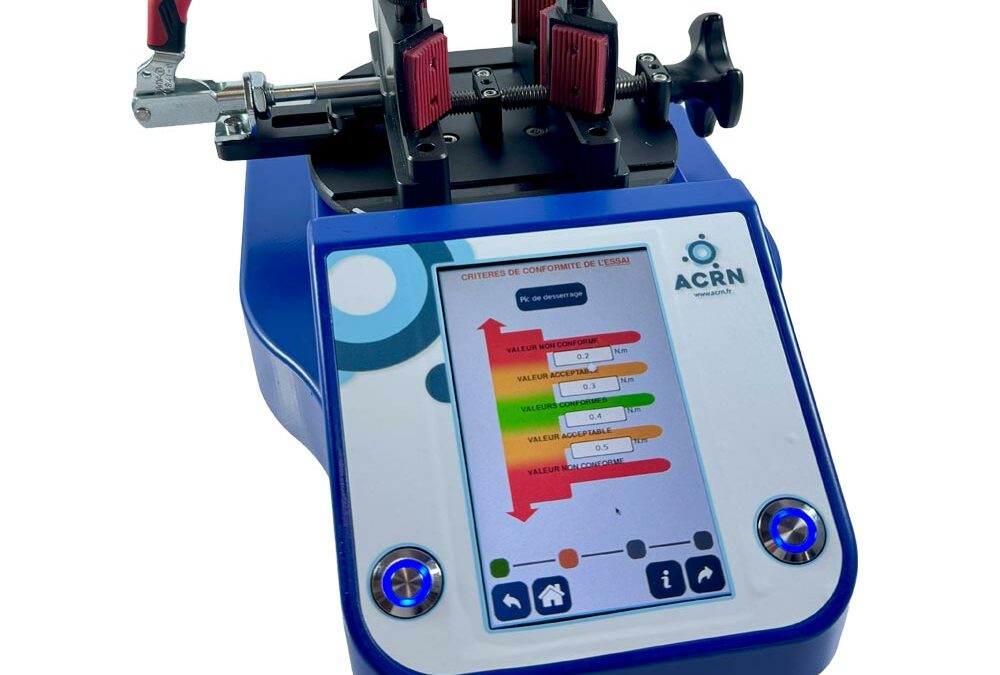
In the industrial, automotive and research sectors, precision is paramount. When assembling components with screws or bolts, it’s essential to control the force applied. This is where an often overlooked but indispensable tool comes into play: the torquemeter. Also known as a torquemeter, this device precisely measures the torque exerted during tightening.
In this article, find out what a torquemeter is used for, how it works, and in what contexts it is indispensable.
What is a torquemeter?
Definition and operating principle
A torquemeter is an instrument for measuring torque, i.e. the rotational force applied to an object. It is used to check that the tightening of a mechanical component complies with the manufacturer’s specifications or safety standards.
Operation is based on a sensor or resistor mechanism that detects the torque applied. There are mechanical, electronic and digital models, with varying levels of precision.
Differences between torquemeter and dynamometer
Although closely related, these two tools do not have the same function:
- Torque meter measures torque (in Nm, Newton-meter).
- The dynamometer measures a linear force (in N, Newton).
The different types of torquemeter
Manual torquemeter
It looks like a torque screwdriver. It is used for simple clamping or in workshops where volumes do not require automation. It allows direct, visual torque measurement.
Digital torquemeter
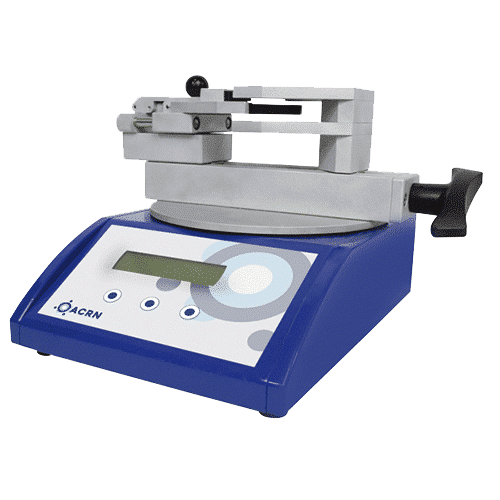
Equipped with a digital display, it accurately shows the measured value. Some models record data for further analysis.
Discover ACRN’s brand-new digital torque meter!
What’s a torquemeter for? Concrete applications
Quality control in industry
The automobile industries
In vehicle manufacturing, incorrect tightening can lead to serious problems:
- Fluid leaks (oil, coolant, fuel)
- Deformation or breakage of parts
- Abnormal vibration or mechanical noise
- Risks to passenger safety
Torque testers are used at every stage of assembly, whether to check the tightness of cylinder heads, wheels or on-board electronic components.
The aeronautics industry
In this high-risk sector, safety requirements are even more stringent. The torquemeter is used to :
- Check the tightness of critical fasteners (engines, wings, landing gear)
- Avoid micro-stressing or overstressing that could affect the structure
- Guarantee traceability and conformity of assemblies to aeronautical standards
The electronics industry
Electronic components are often sensitive to the pressure exerted during assembly. A poorly controlled couple can :
- Damaging printed circuit boards (PCBs)
- Breaking connectors or welds
- Impair the reliability of electrical connections
The use of a torquemeter guarantees reproducible, non-destructive tightening, essential in the production of electronic equipment.
Maintenance and after-sales service
The torquemeter is not just a production tool: it is also indispensable for preventive and corrective maintenance. When equipment is dismantled for repair, inspection or maintenance, compliance with recommended tightening torques is essential to ensure optimum return to service.
Compliance with manufacturer’s recommendations
Each manufacturer specifies precise torque values for the critical assemblies of its equipment (motors, pumps, compressors, electrical boxes, etc.).
In the reassembly phase, tighten :
- Too low can lead to vibrations, stalling and even stoppages.
- Too much force can cause deformation, cracking or breakage of parts
The torquemeter makes it possible to reproduce the original conditions identically, ensuring precise tightening to specification.
Reduced risk of breakdown
Using a torquemeter during maintenance work allows you to:
- Avoid human errors linked to the “feeling” of the technician
- Reduce the risk of future breakage or failure
- Extending equipment service life
- Improve overall equipment reliability
Traceability and compliance
In certain sectors (nuclear, railways, aeronautics, medical, etc.), it is mandatory to document all maintenance operations, including the torque values applied.
Digital or connected torquemeters allow :
Complete traceability of operations, guaranteeing safety and regulatory compliance
Automatic recording of measured values
Exporting data to reports or CMMS software
Research & Development
In laboratories and engineering departments, the torquemeter is an essential analysis and validation tool. It’s no longer just a matter of checking a finished product, but of understanding, testing and optimizing the performance of new materials, parts or assemblies.
Mechanical resistance test
Torquemeters are used for :
- Measure the screw-on/unscrew-on resistance of materials or coatings
- Study the behavior of components under controlled mechanical loads
- Identify failure or slip limits
This enables engineers to select the materials best suited to the mechanical constraints expected in their field of application (automotive, medical, electronics, etc.).
Simulation of usage conditions
Some torquemeters, particularly motorized or intelligent models, can simulate :
- Repeated screwing cycles
- Variations in temperature or humidity during testing
- Progressive deformation or fatigue effects
These tests reproduce a product’s actual conditions of use, in order to anticipate aging or weak points.
Prototype validation
Before going into production, prototypes must be tested and validated:
- A torquemeter is used to check whether assemblies can withstand the anticipated loads.
- It helps optimize fastening, torque and tolerance choices
- It provides objective data to be included in technical files or approvals.
Thanks to these precise measurements, R&D teams can improve product design, reducing the risk of failure during industrial launch.
Choosing the right torquemeter
Depending on use
- One-off use → manual torquemeter
- Regular quality control → digital torquemeter
- Precise production measurements → electronic torquemeter
Selection criteria
- Measuring range (in Nm)
- Reading type (analog or digital)
- Accuracy
- Ergonomics and robustness
How to use a torque meter effectively?
Steps for use
- Choose the right measurement range.
- Set target value (depending on model).
- Apply force slowly and evenly.
- Read or save measurement.
Best practices
- Always calibrate the device regularly.
- Do not exceed maximum capacity.
- Store the tool in a dry, clean environment.
Conclusion
The torquemeter is an essential tool for guaranteeing the quality, safety and performance of mechanical assemblies. By enabling precise torque measurement, it helps prevent tightening errors, breakdowns and accidents. Whatever your sector, investing in a good torquemeter is a guarantee of reliability.