
Sensors & Instrumentation
Sensor for
Force
Our force transducers are designed to optimize your measurements with precision and reliability—whether for tension, compression, or high-capacity applications.
- COFRAC
- Made in France
- Dedicated After sale
Accuracy & reliability
Our load cells ensure consistent measurements in all your environments—from the laboratory to the most demanding industrial production lines.
|
Accuracy ±0.5% |
Fields 0.1 N — 200 kN |
|
Modes tensile &compressive |
Cover Overload limit switch |
- UAutomotive
- UAeronautics
- URobotics
- UMedical
- UIndustry
- UTest benches
Our product line
Our ACRN force sensors
Mechanical stop
Mini SEJ

High-precision load cell for low loads. Tension and compression with built-in overload protection. Ideal for laboratories and test benches.
- EVery low expenses
- ETraction & compression
- ELab & Test Bench
Mechanical stop
SEJ-Z
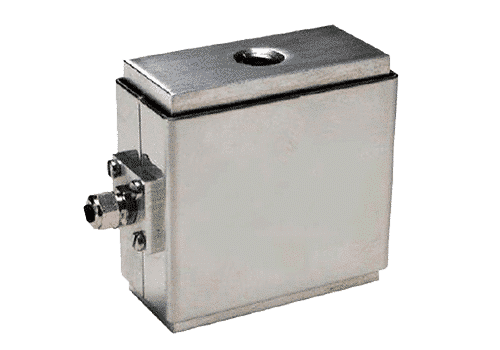
High precision in tensile and compressive testing. Protected against accidental overloads by a mechanical stop. For laboratories and test benches.
- EStandard Loads
- EOverload limit switch
- ELab & Test Bench
En S — Compact
SEJ
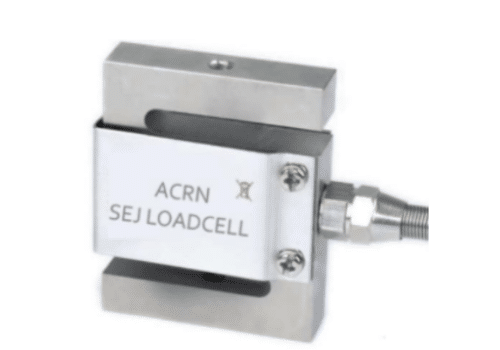
High-precision, compact ” S ” cell. Can be used with load rings or load buttons for optimal performance.
- ECompact S-size
- ELoading rings & buttons
- ESuperior performance
High capacity
QJ & RJ
High capacity for heavy loads. Tensile and compressive strength, robust, and protected against overloads. Demanding industrial environments.
- EHigh costs
- ETraction & compression
- EDemanding environments
Miniature Compression
FJ Cells
Compact and very slim, with excellent durability. Stainless steel, spherical knob, surface-mounted. Compatible with ACRN consoles.
- ECompact Format
- EHigh-strength stainless steel
- EACRN-compatible console
Comparison
Which force sensor should I choose ?
| Criteria | Mini SEJ | SEJ-Z | SEJ | FJ Cells | QJ & RJ |
|---|---|---|---|---|---|
| Mode | Traction & compression | Traction & compression | Traction & compression | Compression | Traction & compression |
| Capacity | Low expenses | Standard Loads | Extended Ranges | Low expenses | High capacity |
| Overload limit | ✓ Yes | ✓ Yes | No | No | ✓ Yes |
| Material | Steel | Steel | Steel | Inox | Steel |
| Applications | Laboratory, high precision | Lab, test bench | Versatile | Flat industrial | Heavy industry |
Business Sectors
Our main areas of expertise
Packaging & Bottling
Measurement of closure and pull-off forces on vials, bottles, and cans. Random sampling inspection on the production line.
Pharmaceuticals & Cosmetics
Measurement of insertion and extraction forces on metering pumps, aerosol dispensers, and closure systems. Metrological traceability is ensured.
Food & Beverage & Packaging
Opening force of flexible packaging, strength of lids and seals, peelability testing on packaging lines.
Automotive & Aerospace
Testing of tensile forces on cables, connectors, and mechanical assemblies. Verification of critical extraction forces.
Industries & Assembly
Measurement of spring insertion, insertion, and compression forces. Qualification of assembly positions.
R&D & Laboratories
Material characterization, tensile and compression testing of samples, and repeated measurements in a test environment.
Services & Support
What we offer with our sensors
COFRAC-traceable calibration
ACRN Console Integration
Detailed technical data sheets
Customized support
SAV & recalibration
Specific development
Applications & Industries
Force sensors : Applications
Force measurement is a requirement common to many industrial and scientific sectors. Whether you need to verify the strength of a part, check the clamping force of an assembly, or characterize the mechanical properties of a material, our ACRN force sensors can be used in a wide variety of applications. Their high precision, ruggedness, and compatibility with ACRN measurement consoles make them the go-to instruments for your test benches and quality control systems.
Sector 01
Automotive industry
In the automotive industry, force control is essential at every stage of the assembly process. Force sensors are used to verify the insertion force of parts, measure the clamping force of fasteners, test the strength of plastics and metals, and check the snap-fit force of connectors. Our SEJ-Z, QJ, and RJ cells are particularly well-suited for automotive test benches thanks to their high capacity and durability in industrial environments.
In the aerospace industry, the requirements for precision and traceability are among the highest in the industry. Force transducers are used for testing the strength of composite materials, qualifying structural assemblies, monitoring crimping forces, and conducting fatigue tests. Our SEJ-Z and SEJ mini cells provide the high precision required for these critical tests. COFRAC-traceable calibration ensures that your measurements comply with regulations and that results are fully traceable.
Sector 02
Aeronautics
Sector 03
Robotics & Medical
In robotics, force sensors are used to measure the gripping force of robotic arms, protect systems from overload, and ensure precise control of interactions with the environment. In the medical field, they are involved in the design of prosthetics, rehabilitation devices, and surgical instruments. The miniaturization of the FJ cell and the extremely high precision of the Mini SEJ-Z make them the gold standard for these high-value-added applications.
In industry in general—including the food and beverage, energy, chemical, and packaging sectors—force sensors are used in dosing systems, presses, conveyors, and test benches. Our high-capacity QJ & RJ cells can handle heavy loads and withstand harsh environments. Compatibility with ACRN measurement consoles enables real-time data display and direct export of data to your quality management systems.
Sector 04
Industry & Test Benches
Everything You Need to Know
Force Sensor : A Comprehensive Guide
A force sensor (or load cell) is a transducer that converts mechanical force into a measurable electrical signal. The most common technology involves strain gauges bonded to a deformable body : when a force is applied, the body deforms slightly, causing a change in electrical resistance that is proportional to the applied force.
ACRN offers a comprehensive range of force sensors for all applications : from very low loads with the Mini SEJ-Z to high-capacity measurements with the QJ and RJ models. All of our sensors are COFRAC-traceable and manufactured to rigorous quality standards, ensuring long-term reproducibility and accuracy.
For optimal performance, our sensors connect to ACRN measurement consoles, which enable digital display, recording, and export of measurements. Our technical team will help you select the sensor that best suits your measurement ranges, your environment, and your integration requirements.
Frequently Asked Questions
FAQ — Everything You Need to Know About Force Sensors
01
What is a force sensor ?
A force sensor is a device that measures the force exerted on an object and converts it into an electrical signal that can be analyzed or displayed. It typically relies on strain gauges attached to a deformable body.
02
How does a force sensor work ?
Most force sensors operate using strain gauges that deform when force is applied. This deformation causes a change in electrical resistance, which is then converted into a measurable value by a signal conditioner or a measurement console.
03
Where are force sensors used ?
Force sensors are used in a wide range of industries : the automotive industry (testing of parts and assemblies), aerospace (material strength testing), robotics (gripping force), the medical field (prosthetics, rehabilitation), and industrial test benches (quality control, dosing, pressing).
04
Does a force sensor require maintenance ?
Force sensors are durable and require little maintenance. However, periodic calibration checks are recommended to ensure accurate measurements over time. ACRN offers a COFRAC-traceable recalibration service to ensure your instruments remain compliant.
05
How do I choose between the Mini SEJ-Z, SEJ-Z, and SEJ-1 ?
The Mini SEJ-Z is designed for very low loads and features overload protection—making it ideal for high-precision laboratory measurements. The SEJ-Z provides the same protection for standard loads. The SEJ in the ” S ” format offers a wider range and superior performance when used with load rings or load cells.
06
What is the difference between a force sensor and a dynamometer ?
A force sensor is an electronic component that outputs a raw signal (typically in mV/V), which requires a signal conditioner or a measurement console to be processed. A dynamometer is a self-contained instrument with its own display and units of measurement. ACRN sensors are designed to be integrated into test benches and measurement systems, while ACRN dynamometers are standalone instruments.
07
What type of output signal does an ACRN force sensor provide ?
Our force sensors provide an analog output signal in mV/V (millivolts per volt of supply voltage), which is standard in industrial instrumentation. This signal connects directly to ACRN measurement consoles or any Wheatstone bridge-compatible signal conditioner. For integration into a digital acquisition system, our consoles offer RS232, USB, or 0–10 V analog outputs, depending on the model.
08
Can a force sensor be used in a humid or corrosive environment ?
Yes, depending on the model. The FJ cell is made of stainless steel, which makes it highly resistant to corrosion and humid environments. For applications in harsh environments (washing, liquid splashes, corrosive atmospheres), we recommend that you consult with us to determine the appropriate IP rating for your environment and, if necessary, consider a custom solution.
09
How do you integrate a force sensor into an automated test bench ?
Our sensors can be easily connected to any data acquisition system via their standard mV/V output. When paired with ACRN measurement consoles, they provide digital outputs (RS232, USB) that enable integration into monitoring software or PLCs. For custom test benches with automated control systems, our team of engineers can handle the entire integration process and provide a turnkey solution.
10
What is the service life of a force sensor ?
Our force sensors are designed for heavy-duty, long-term use. Under normal conditions of use—without overloading and when handled with care—their service life generally exceeds 10 years. The built-in protection against accidental overloads on the SEJ-Z and Mini SEJ-Z models significantly extends their service life. Periodic recalibration (annually or according to your quality plan) is recommended to maintain measurement accuracy.